Ask a General Manager what members want from a club app and the usual answer is convenience. That is true, but it is not specific enough to act on. Convenience means something different depending on which app a member used an hour before opening yours.
A member who just checked their balance on a banking app, then booked a table on a restaurant app, has a working idea of what a good digital experience feels like before they ever open your club's app. One login. Instant information. A payment that takes two taps. When your app falls short of that, the comparison a member makes is not to what the club offered five years ago. It is to what they experienced twenty minutes earlier on their own phone.
Why members judge your club app against their banking app
Golf clubs tend to benchmark their app against other clubs. That is the wrong reference group. Members do not spend their day moving between golf club apps. They spend it moving between banking, travel, food delivery, and messaging apps, and those experiences set the baseline long before a member downloads yours.
This is not a fair comparison in one sense. A high street bank has an engineering budget your club will never have. But it is the comparison members make anyway, because it is the only frame of reference they actually use. A booking flow that takes six taps and a phone call to confirm does not get judged against what club apps usually offer. It gets judged against an app that let the same member book a flight in ninety seconds that morning.
Clubs that accept this and design around it tend to see much better member engagement. Clubs that keep comparing themselves only to other clubs tend to keep shipping the same clunky experience, because the bar they are measuring against never moves.
What actually frustrates members
The specific frustrations are consistent across clubs, and none of them are complicated to name.
Multiple logins. One account for booking tee times, a different one for competition entry, a separate card or fob for the bar and pro shop. Members end up holding three mental models of the same club.
Phone-only booking. If the only way to book is calling the pro shop during office hours, members who work normal hours are structurally disadvantaged, and they notice every time.
No visibility into a competition while it is happening. A member playing in the Saturday medal has no way to see where they stand until results go up on Monday, if the format even allows for that. Compare that with checking a live score on a phone at any professional event.
Clunky payment. Reading a card number over the phone, or settling a halfway house tab in cash because the card machine is back at the main bar, is friction a member notices every single time, even after the club has stopped noticing it.
Individually, none of these is a crisis. Together, they add up to a club that feels behind, and members form that impression quickly.
What the adoption numbers show
The gap between a good app and a mediocre one shows up directly in usage. Clubs that get the experience right typically see 70 to 80 percent of members actively using the app within three months of launch. Clubs that ship something clunky struggle to get past 40 percent, and a meaningful share of that 40 percent stops opening it after the first attempt.
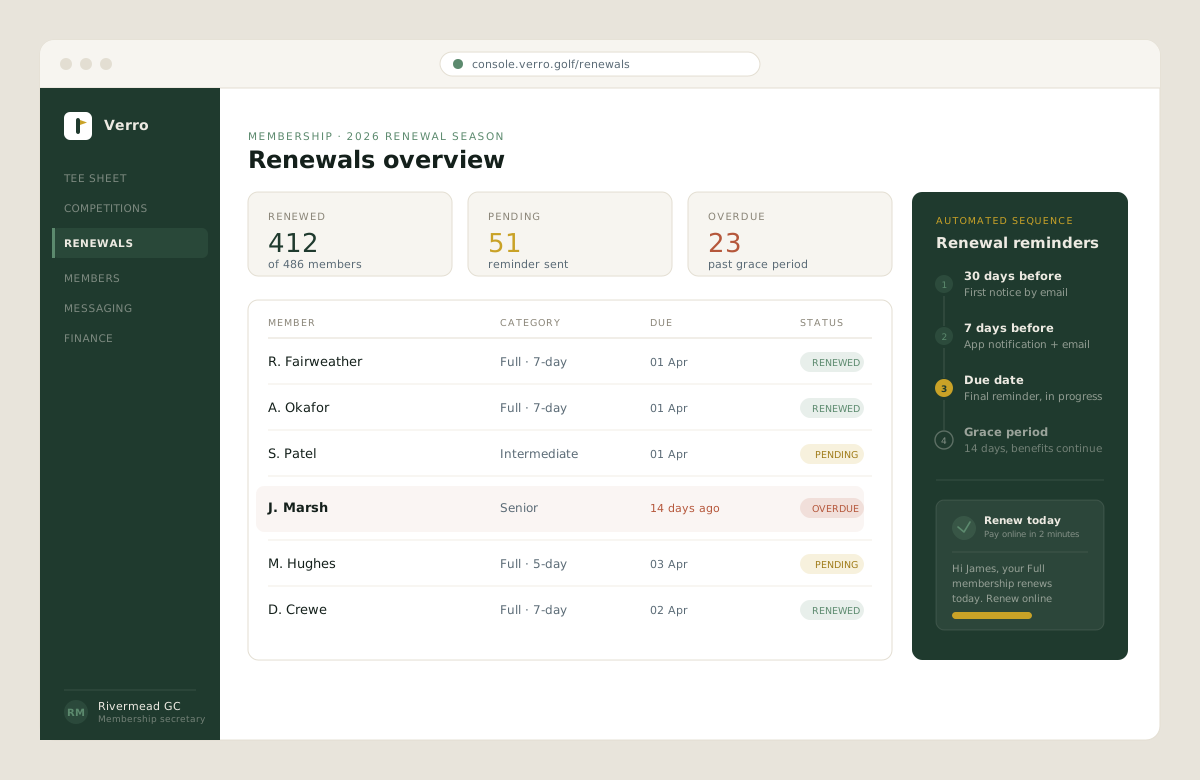
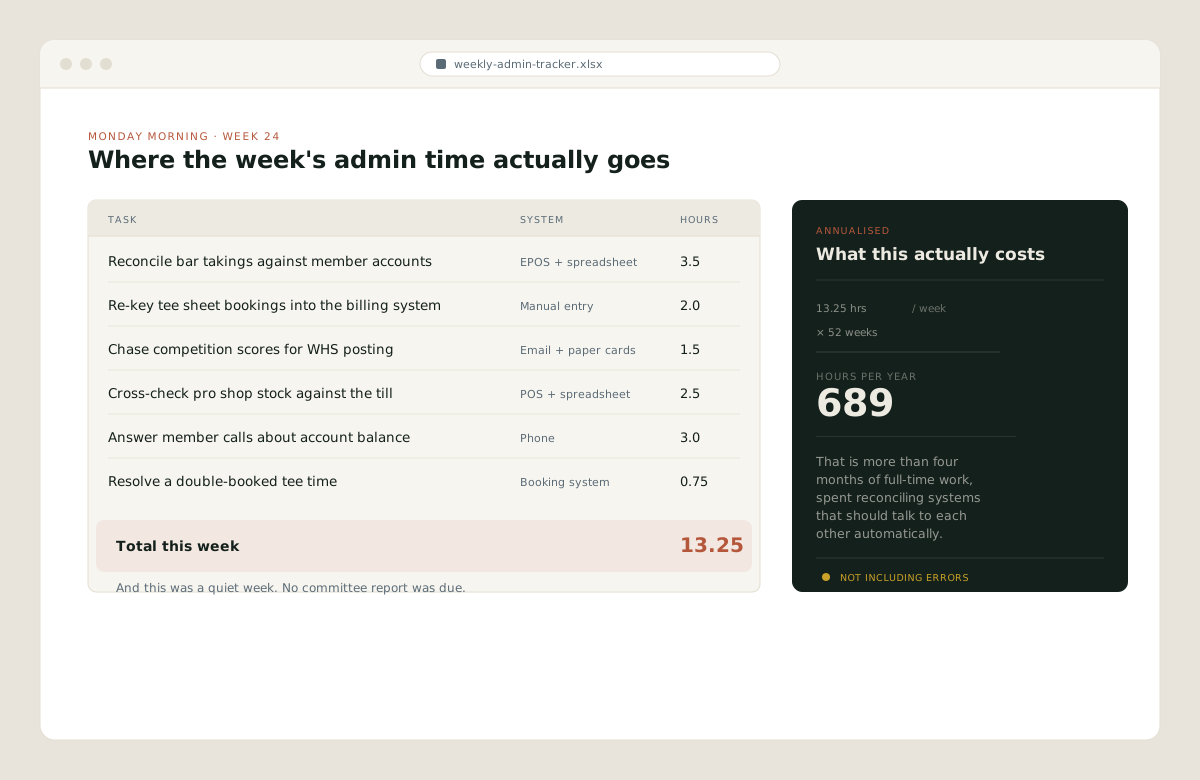
That adoption gap matters beyond the app itself. Clubs running genuinely integrated management software, where the app, the tee sheet, competitions, and billing all share one member record, tend to see meaningfully higher renewal and retention rates than clubs still running separate systems stitched together with spreadsheets. A connected app is not just a nicer interface. It is one of the reasons a member renews without thinking twice.
The same pattern shows up in something as specific as no-shows. Clubs using automated booking reminders, sent as a push notification rather than relying on a member to remember, see a significant drop in no-shows on the tee sheet. It is a small feature with a measurable effect, and it only works if the reminder arrives inside an app the member actually has open.
It is also a good example of what real automation in club software looks like: narrow, specific, and provable, rather than the broader AI claims now common in vendor pitches. See our piece on what AI in golf club management actually means for that distinction in full.
What a genuinely good club app includes
Strip away the marketing language and a genuinely good club app does a small number of things well.
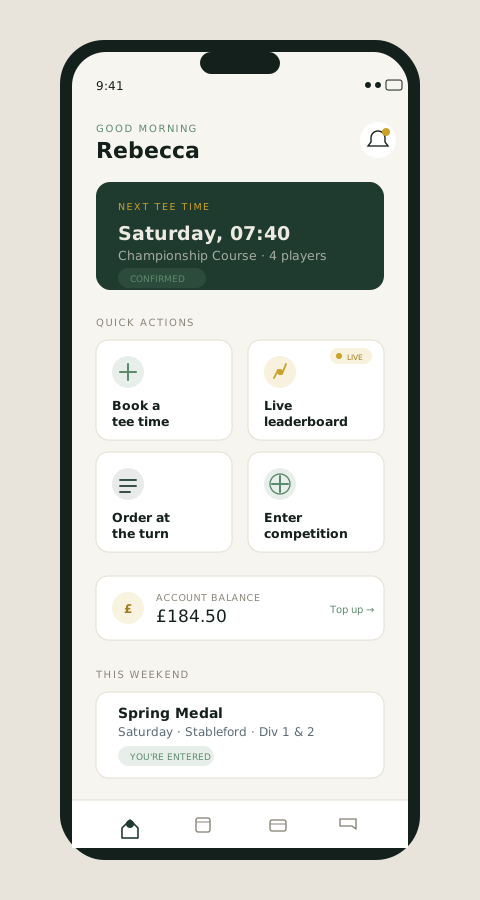
- Real-time tee sheet booking, with live availability, not a slot that looks free and turns out to be double-booked when the member arrives.
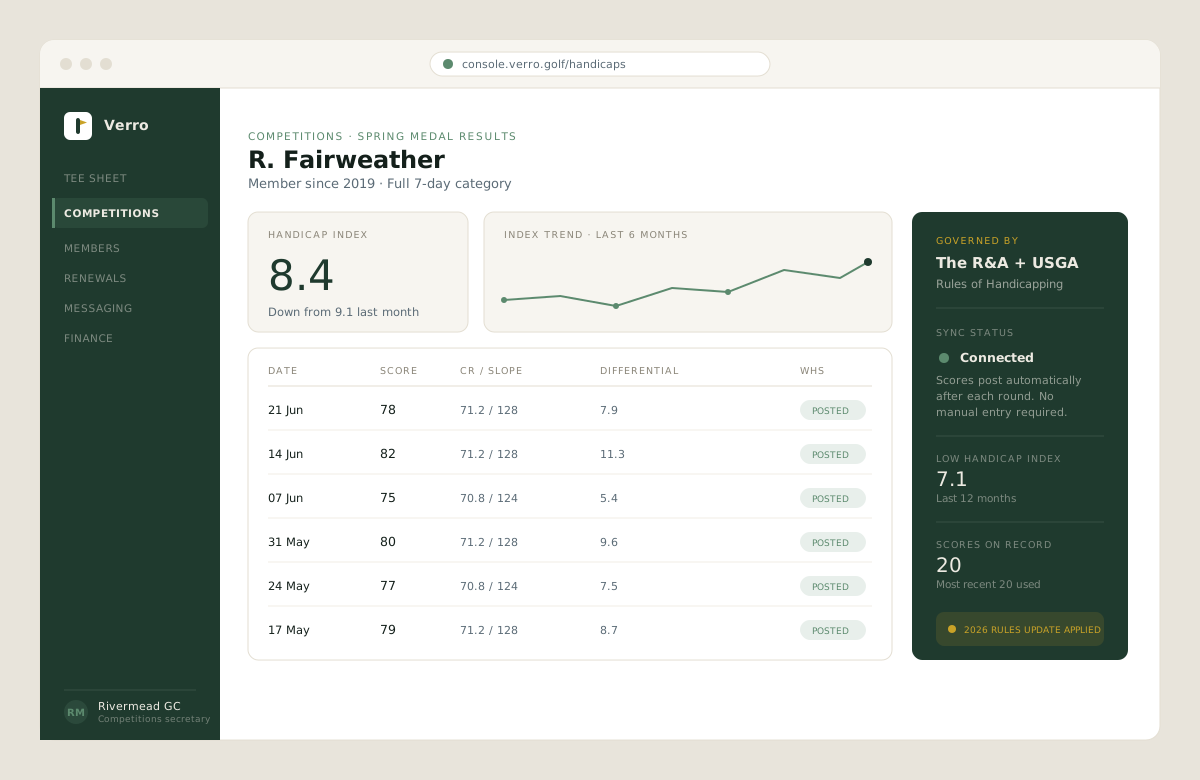
- Live scoring during competitions, so a member can check where they stand while still on the course, not on Monday.
- One account balance across the bar, the pro shop, and bookings, so a member sees a single number rather than reconciling three separate tabs in their head.
- Push notifications that replace the noticeboard: a reminder about tomorrow's tee time, a competition draw, a change to Sunday's format, delivered to a phone rather than pinned to a corkboard most members walk past once a week.
None of these individually sounds ambitious. Together, they are the difference between an app a member opens once to book and forgets about, and one they use every time they think about the club. The full Verro platform is built around exactly this list.
Why the app should carry your club's name, not the vendor's
One detail clubs underestimate is whose name is on the app. A member downloading an app that shows a software vendor's logo and generic branding does not feel like they are using their club. They feel like they are using a piece of software the club happens to have bought.
That distinction affects adoption more than most clubs expect. An app with the club's own crest, colours, and name on the home screen and in the app store listing reads as an extension of the club. The same functionality under a vendor's brand reads as a third-party tool the club outsourced. Members are more likely to trust, download, and keep using the version that looks and feels like theirs.
This is a genuinely easy thing to get right, and a lot of clubs are still getting it wrong simply because their current provider does not offer it as standard.
The same problem shows up on the website, not just the app. A "Book a tee time" button that sends a visitor off to a vendor's unbranded booking domain does the same quiet damage, at the exact moment someone found the club through a search and was ready to commit. We cover that in more detail in the uncomfortable truth about golf club SEO.
What to do with this
Start with one question: could a member book a tee time, check a live score during their round, and settle a halfway house tab without leaving one app, under your club's own name? If the honest answer is no, you now know exactly what to prioritise, and it is probably not the feature your committee has been debating for the last two meetings.
Fix the basics first. One login. One account balance. Live information during play, not after it. Notifications instead of a noticeboard. Everything else is secondary to getting those right.
This is what Verro's member app is built to do: one login, your club's own name and branding, real-time booking and scoring, and a single account balance across every part of the club. Book a demo and we will set it up using your club's own name, course, and membership structure.
Adam Lynch is the founder of Verro. He previously served as Assistant Director of Digital Media at The R&A and as CEO of WooRank, a SaaS platform acquired in 2023.