Golf trade press right now is full of pieces describing AI as poised to automate administrative tasks, improve customer service, and optimise daily operations across club management. Read that sentence again. "Poised to." That is future tense doing a lot of work. Almost every piece in this genre is describing a near-future trend, not a widely deployed reality in 2026, and the distinction matters enormously if you are the one signing a contract based on it.
I say this having spent years running WooRank, an SEO software company, through a period when every vendor in that market suddenly discovered "AI-powered" as a prefix for features that had existed, unchanged, for years. Some of it was genuinely new capability. Most of it was the same feature with a new label. Golf club software is having its own version of that moment now, and a club committee evaluating vendors deserves a clearer answer than "AI-powered" gives them.
What is actually working today
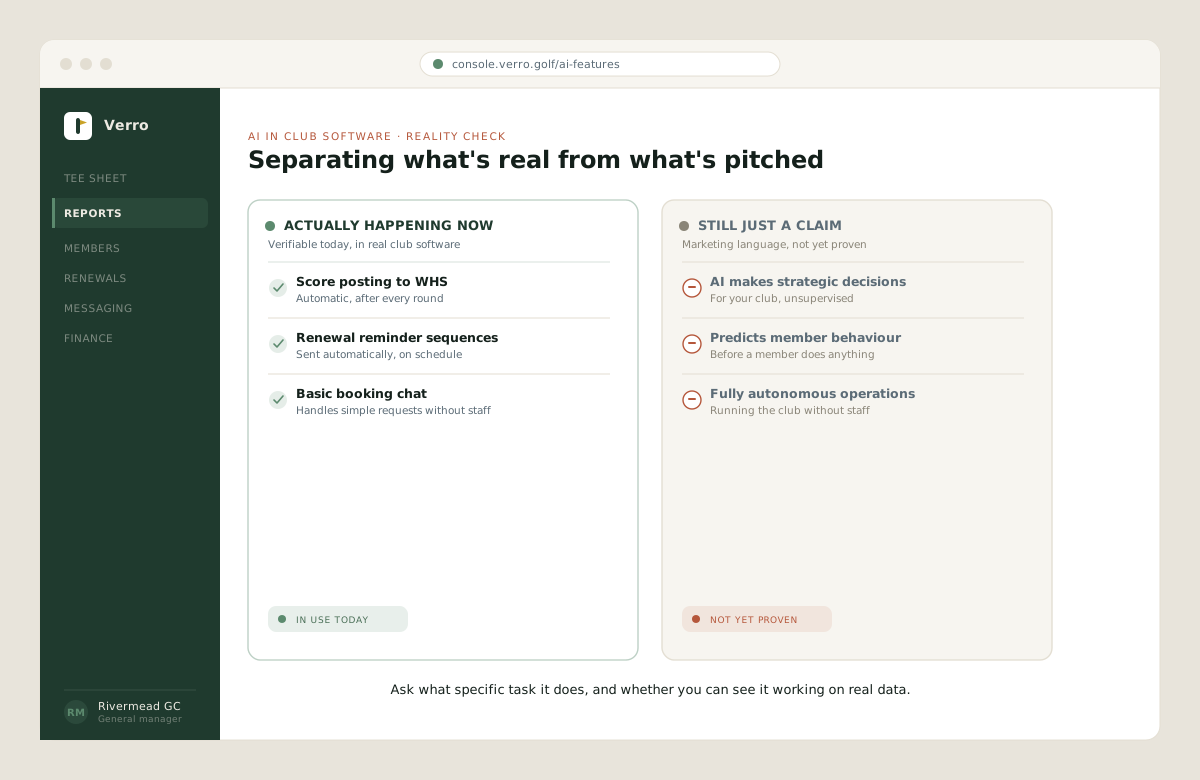
Strip away the marketing language and a small number of genuinely automated, task-specific features exist across club software today, Verro's included. They share three things in common: they do one narrow job, they run without a human triggering each instance, and you can watch them happen on a real club's data during a demo.
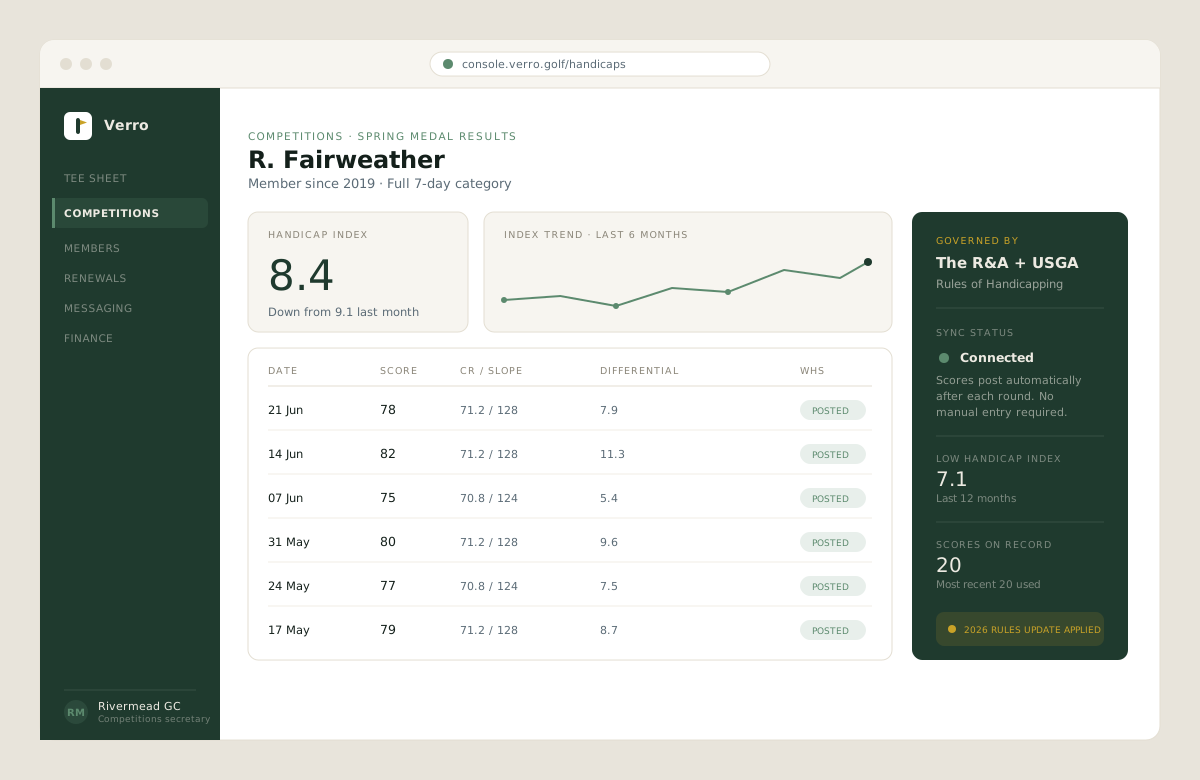
- Automatic score posting to WHS. A competition score, once confirmed, posts to the handicap system without a member of staff keying it in a second time. This has existed for a while and it works, reliably, because the task is narrow and the rules governing it are fixed.
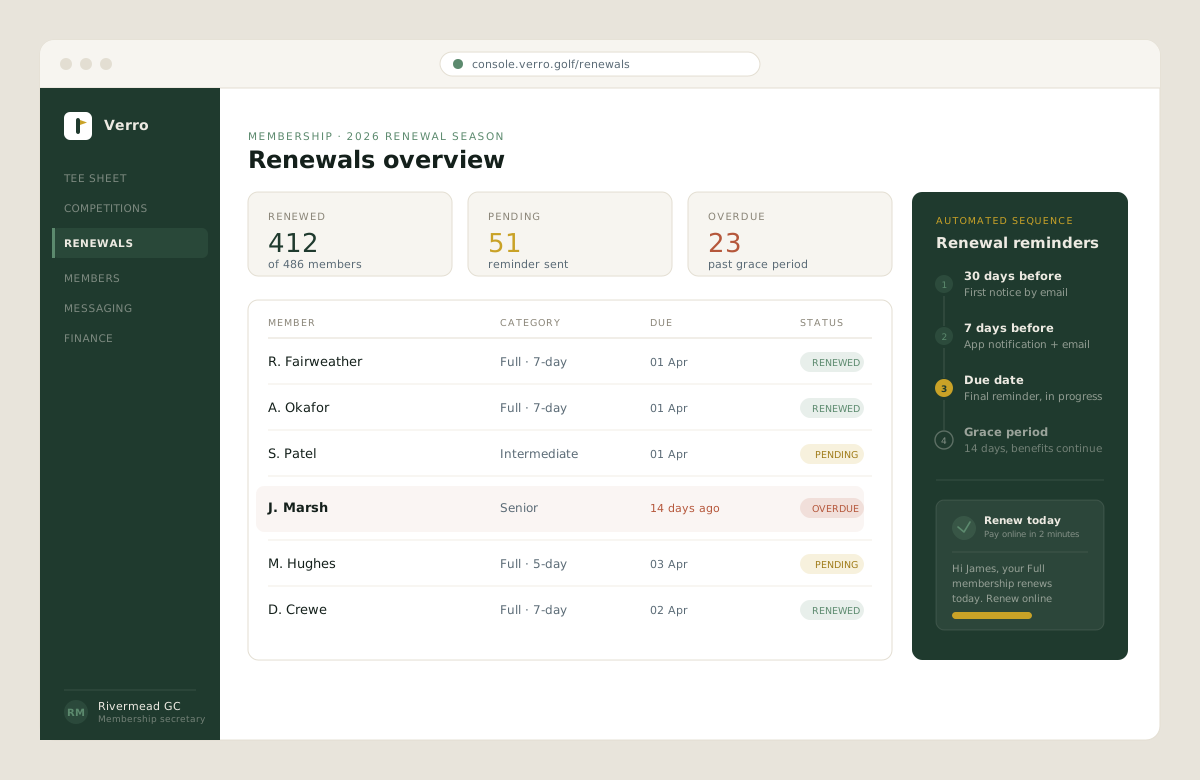
- Automated renewal reminder sequences. A set of reminders, on a schedule, sent without a membership secretary manually triggering each one. This is genuinely useful automation, and it is also, honestly, closer to a mail-merge with a calendar than anything that deserves the word "intelligence."
- Basic chatbot-assisted booking. A member asking to check tee time availability or start a booking gets an answer without waiting for the pro shop to pick up the phone. This works well for simple, well-defined requests and badly for anything outside that scope, which is exactly what you would expect from task-specific automation rather than genuine understanding.
Notice what all three have in common. None of them decide anything. They execute a fixed process faster and more consistently than a person doing the same task by hand, every time, without getting tired on a Friday afternoon. That is a real, useful, unglamorous kind of automation, and it deserves credit for exactly what it is.
What is still just a pitch
The broader claims are a different category entirely. AI-driven strategic decision-making for a club. Predictive modelling of member behaviour, churn, or spend. Fully autonomous club operations that reduce staffing needs. These appear constantly in vendor marketing and trade press coverage, and as of 2026 they remain largely speculative, or marketing language describing a roadmap rather than a shipped product used at scale.
That is not a claim that these things are impossible. Some of them may well exist in a genuinely useful form eventually. It is a claim that "eventually" and "now" are being blurred together deliberately, because a roadmap slide reads better as a present-tense feature than as a future intention. A club committee should be able to tell which one they are being shown.
A plain-English test for any AI claim
You do not need a technical background to interrogate this. Two questions do almost all the work.
What specific task does this do? Not a category, a task. "AI-powered member insights" is a category. "It flags members who have not booked a tee time in 60 days" is a task. If a vendor cannot answer in one sentence what the specific, narrow thing is that happens, there is a reasonable chance the feature is a slide, not a product.
Can I see it working on a real club's data, right now, in this demo? Not a mock-up. Not a roadmap screenshot. Not "we're rolling that out to a select group of clubs soon." An actual working feature, on actual data, that you watch happen in front of you. If the answer involves the word "soon," you now know which category you are in.
A useful third question, if you want to push further: what happens when it gets it wrong, and who is accountable for that. A vendor with a real, narrow automated feature will have a clear, boring answer, because the failure modes of a fixed process are well understood. A vendor pitching something broader will often struggle to answer this cleanly, because the honest answer is that nobody has run it at scale long enough to know.
Why skepticism protects your budget, not just your dignity
There is a social pressure in committee rooms to nod along with "AI-powered" rather than ask the boring, specific question that exposes a marketing slide for what it is. Nobody wants to be the person in the room who sounds like they do not understand the future. That instinct is backwards.
A club that pays a premium for a vaguely described AI capability, and gets a mail-merge with better branding, has wasted budget it could have spent on something that actually helps members. A club that asks the two questions above, gets a clear answer, and signs based on what a feature actually does, has protected both its budget and its members from a promise the software cannot keep on day one. Being the skeptical voice in that room is not old-fashioned. It is the only position that is actually doing its job.
Where Verro actually stands on this
In the interest of applying the same standard to ourselves: automatic WHS score posting, renewal reminder sequences, and basic booking assistance are genuine, shipped automation inside Verro today, not roadmap items. They are narrow, they are task-specific, and you can watch every one of them run on real data in a demo, which is precisely the test this piece has been arguing for.
We are not currently claiming AI-driven strategic decision-making or predictive member behaviour modelling as a shipped feature, because it is not one, and describing it that way would make us exactly the vendor this piece is warning you about. If and when that changes, the honest answer will still be the specific one: what task, and can you see it working on your own data.
Adam Lynch is the founder of Verro. He previously served as Assistant Director of Digital Media at The R&A and as CEO of WooRank, a SaaS platform acquired in 2023.