Founder stories tend to be told backwards. The ending is known, so every earlier decision looks as if it was heading somewhere on purpose. I ran a SaaS company through to an acquisition, and from the inside it did not feel like that. It felt like a long series of decisions made with incomplete information, some of which turned out well.
This piece is not going to give you numbers from WooRank, a tidy framework, or a promise that Verro is better because I have done this before. It is a set of reflections on what I took from the experience, and what I am trying to do differently now. You can decide how much weight to give them.
Why a golf person ended up running a SaaS company
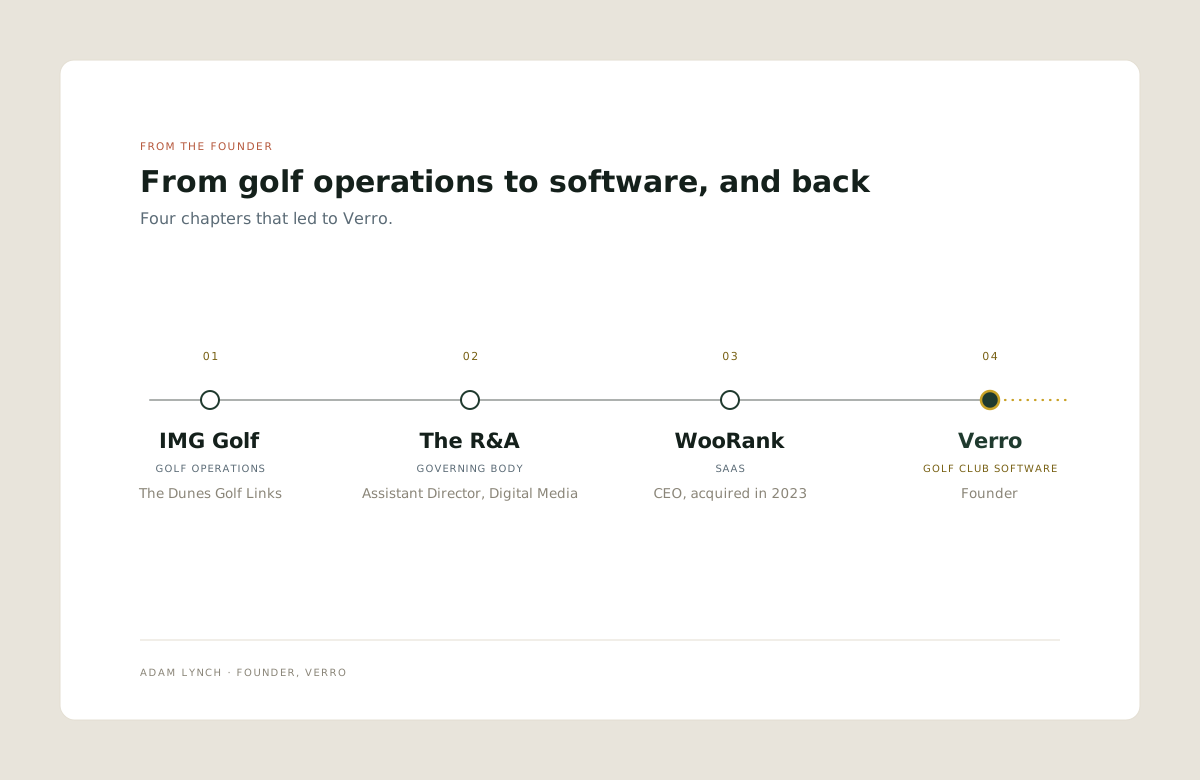
My career in golf began at IMG Golf, working at The Dunes Golf Links. That was a hands-on introduction to the commercial reality of a golf facility: what it costs to run, who does the work, and how many separate things have to go right in a single day. You learn quickly that a golf course is a small business with an unusual number of moving parts.
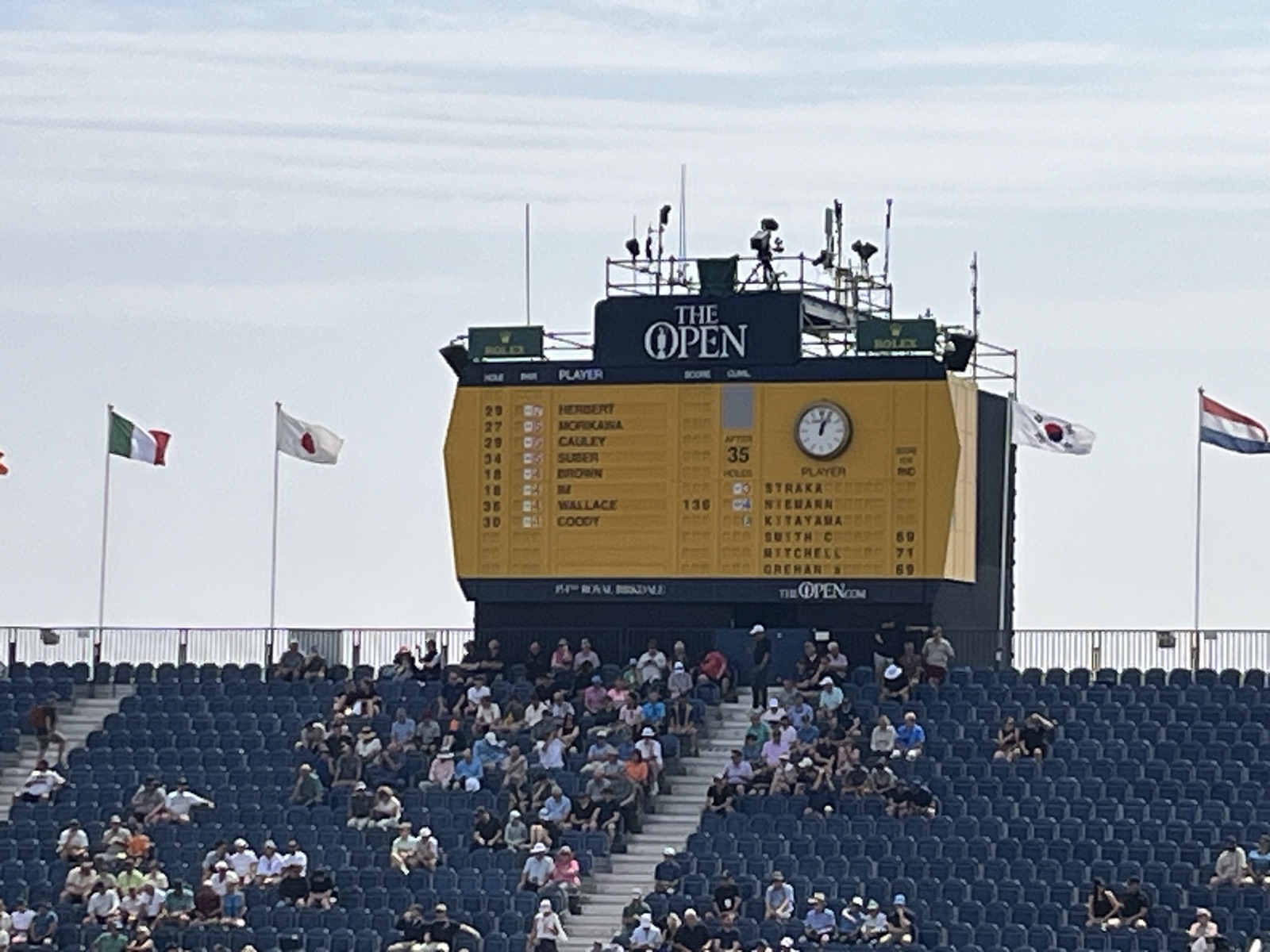
From there I joined The R&A in St Andrews, eventually as Assistant Director of Digital Media. That role put technology at the centre of my work for the first time. The Open Championship is one of the most visible events in sport, and TheOpen.com draws tens of millions of visitors during Open fortnight. Running the commercial digital side of that taught me two things that have stayed with me. Software, done well, changes how a sport meets its audience. And the gap between what an organisation wants to offer and what its systems let it offer is usually wider than anyone admits.
The move into software came from that second observation. I had been involved in a number of start-ups by the time I took over WooRank, and I wanted to be on the side of the table that builds the tools rather than the side that briefs them. WooRank gave me that, with customers in more than a hundred countries rather than a single organisation. The short version of my background is on the about page. This is the longer, less tidy one.
What running a SaaS company teaches you that is invisible from outside
Some of this will sound obvious. It did not feel obvious at the time, and I suspect that is true of most useful lessons.
Customers tell you what they do far more reliably than what they want. A customer will describe the feature they think they need. What they actually do in the product, and what they quietly stop doing, is much closer to the truth. The habit worth building is to watch behaviour first, and treat a request as a clue to the underlying problem rather than a specification.
A product accretes. Every SaaS product I have seen, including my own, tends to grow features faster than it grows coherence. Each addition is defensible on its own. Together they produce something harder to use and harder to change than anyone intended. Adding is easy. Deciding what a product will not do is the real work.
Support is research. The questions customers ask support are a free, continuous description of where the product is unclear. It is easy to treat that as a cost to be reduced. It is more useful to treat it as the most honest product feedback you will get.
Timing is mostly outside your control. A good product at the wrong moment struggles, and an adequate one at the right moment can look brilliant. You can prepare, and you can avoid making yourself difficult to work with, but you do not get to schedule luck.
What selling a SaaS company shows you that running one does not
WooRank was acquired in 2023. I am not going to describe the process, partly because it is not mine alone to describe, and partly because the details would not help you. What I can say is what being on that side of a sale does to how you think about a business.
A sale forces you to see the company as someone else would. Not the version you carry in your head, but the one that shows up in the product, the customer relationships, and the way the business is put together. Some of what you are proud of turns out to matter less than you thought. Some of what you took for granted turns out to be the point.
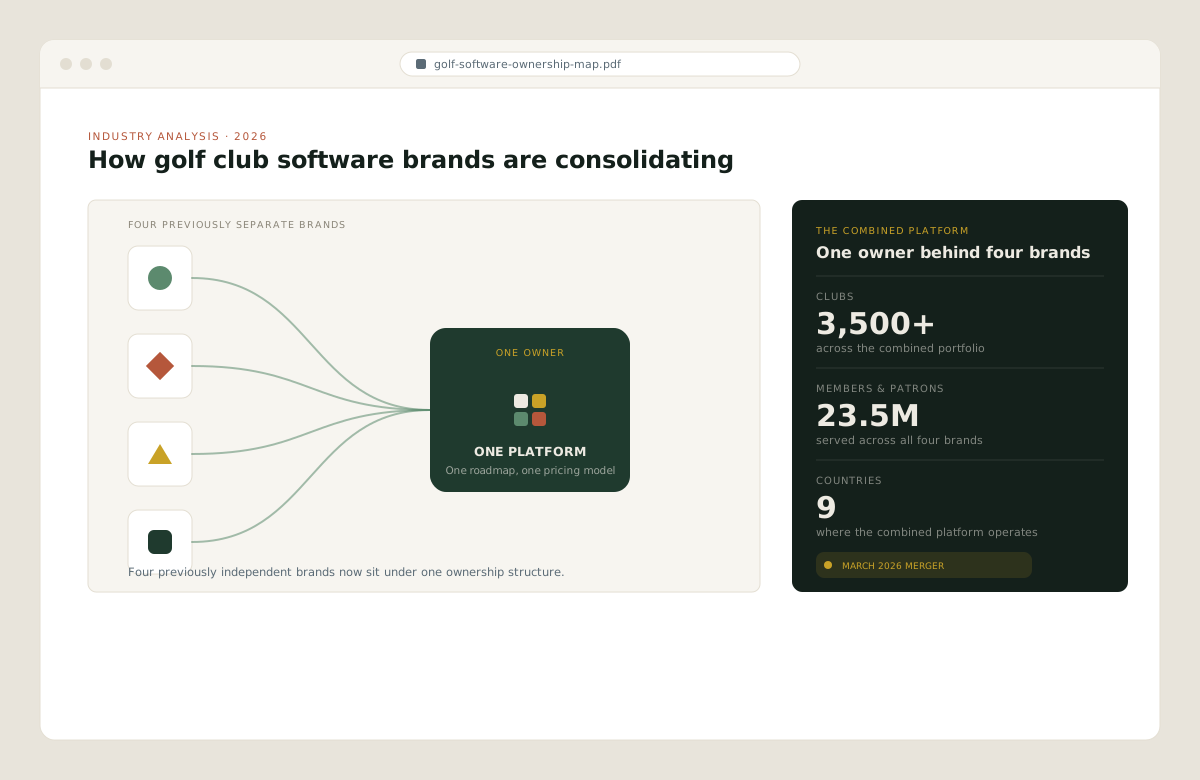
It also changes how you think about customers. When a company changes hands, the people who use the software do not stop needing it to work. Their relationship is with the thing they rely on, not with whoever owns it this year. I came away with a strong sense that the people who use software live with the consequences of decisions made far above them. It is the reason I wrote about what the Xplor-Clubessential merger means for clubs the way I did.
And it removes any illusion that an acquisition is a finish line. It is a handover. That is worth knowing before you build something again.
Why I came back to golf instead of starting somewhere else
After an exit, the obvious question is what to do next. There was no shortage of other places to apply what I had learned. I chose golf, and I will try to give an honest account of why, including the argument against.
I know the problem from both sides. Software for clubs is often built by people who know software but have not worked in a golf facility, or by people who know golf but have not built a product at scale. I have done both. That does not make me right, but it makes me less likely to be surprised by how a club actually works.
The problem is real, and I have watched it. Clubs run several systems to do one job, and their staff spend hours every week reconciling the gaps by hand. I have written about what that costs in the real cost of running multiple golf club management systems, so I will not repeat it here.
I care about the sport. That is not a business argument. I would rather say it plainly than dress it up as one.
The counterargument is fair. Choosing a field you know well carries its own risk: you assume you understand the customer because you have stood somewhere near where they stand. I know a facility's economics from working in one, and a governing body's view from The R&A. Neither is the same as being the general manager who has to explain a bad Saturday to a committee. The best correction I know is to keep asking clubs rather than assuming.
What I am doing differently, and what I am not sure about
It would be neat to say I took a list of lessons from WooRank and applied them. It does not work like that. Some of what I am doing is a direct reaction to something I saw. Some of it is a hunch. I will try to say which is which.
One connected record, from the start. Accretion is the failure mode I worry about most, so Verro is designed around a single member record that every module shares, rather than modules added one at a time. That is far harder to retrofit than to begin with. It is also why a member's booking, bar tab, and competition entry sit in one account, which you can see across the platform.
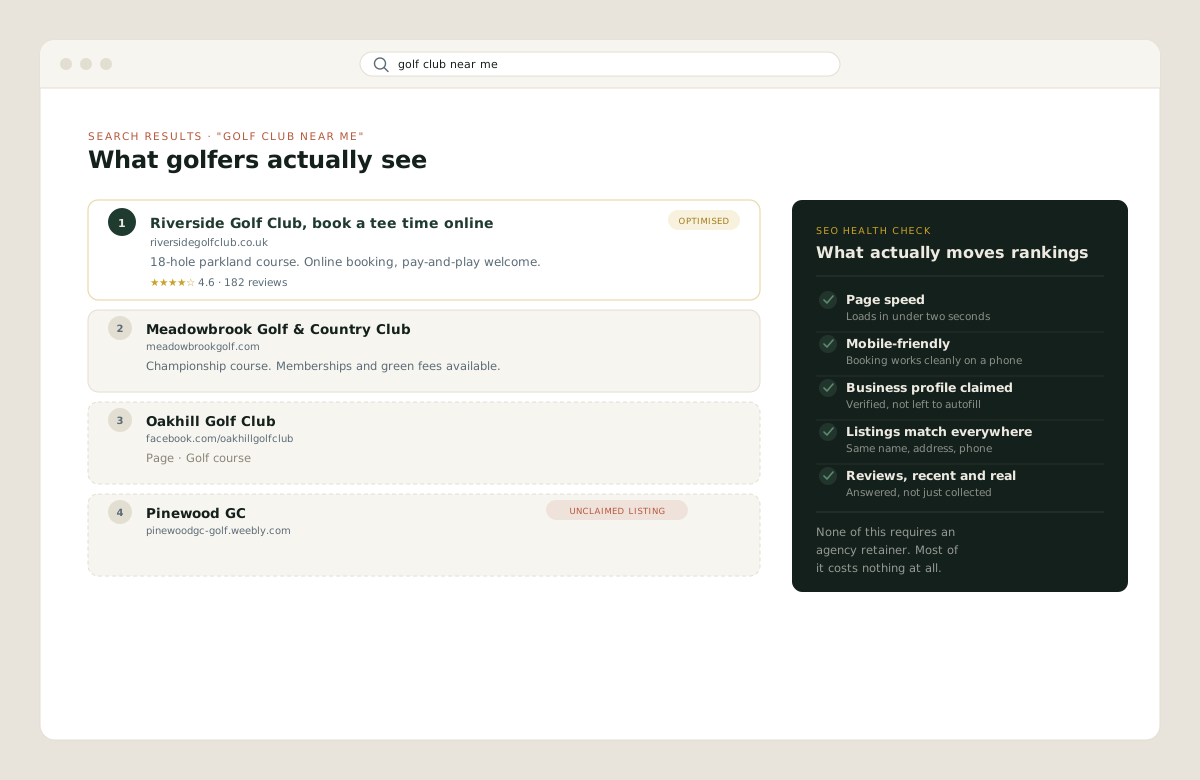
Being plain about what is real. I have watched a market discover a fashionable label and attach it to everything. I would rather describe what a feature does than what it is called, which is why the piece on AI in golf club management says exactly what Verro does and does not do.
Staying independent, and being clear about what that means. Verro is independently owned. I have seen from the other side of a sale that ownership changes, and customers live with the result. I am not claiming independence is automatically better. I am claiming it is a fact clubs are entitled to know when they choose a supplier.
Taking on fewer clubs, and doing them properly. We are working with a small group of founding clubs. That is partly practical, and partly a lesson in how easy it is to promise more than a small team can deliver. I would rather do fewer clubs well than have a long list.
What I am not sure about is which of these will matter most. Some may prove wrong. Others I will only discover when a club tells me something I had not thought to ask. I expect to make mistakes that no amount of experience could have warned me about, because that is what building something new involves. What I can do is say so plainly when it happens.
The founder story is the least important thing about Verro. The platform either works for a club or it does not, and that is the thing to test.
Adam Lynch is the founder of Verro. He previously served as Assistant Director of Digital Media at The R&A and as CEO of WooRank, a SaaS platform acquired in 2023.