I spent several years at The R&A as Assistant Director of Digital Media, responsible for TheOpen.com and the commercial digital presence surrounding The Open Championship. What I saw was an organisation wrestling with exactly the question that golf clubs now face: how do you build a genuinely modern digital experience without losing the things that make the sport worth following in the first place?
The answer has lessons that go well beyond a major championship.
What The R&A actually built
When The R&A set out to rebuild the digital experience around The Open, the brief was not "make the website look better." It was to create a year-round relationship with fans, not just a spike of traffic during championship week.
Before the rebuild, TheOpen.com operated like most club websites still do today. A destination people visited when they needed something specific: a tee time, a leaderboard, a piece of news. Then they left. Traffic was seasonal. Engagement was transactional.
The rebuilt platform changed that. The new site integrated ticketing, merchandise, live scoring, video, player profiles, and venue information into a single connected experience. A fan who bought a ticket could manage it in the same account where they watched highlights and followed their player. The technology stack handled it all: real-time scoring with response times under 250 milliseconds, live streaming, and personalised content based on which players and venues a fan followed.
The numbers reflected the change. At Royal Portrush in 2019, the first Open after the new platform launched, The Open sold out for the first time in its history. Session duration on TheOpen.com increased by 55.8% in a single year. Seven million users visited the site during championship week alone.
The platform was not just better. It was generating measurably more commercial value while giving fans a better experience. Those two things were connected.
The One Club: a single view of the customer
The most significant structural change was The One Club, The Open's own membership platform. Not a loyalty programme. A single customer account that connected every touchpoint: tickets, content, retail, communications.
The thinking behind it was straightforward. If you do not know who your fans are as individuals, you cannot give them a personal experience. You are broadcasting at a crowd rather than talking to people. The One Club gave The R&A the data to do something more precise.
Priority ticket access for members. Exclusive content. Personalised communications based on which venues or players a member followed. The result was a meaningful increase in year-round engagement, not just during championship week. Fans who felt a genuine connection to The Open as something they belonged to, rather than just an event they attended occasionally.
Sound familiar? Replace "fans" with "members" and you are describing exactly what golf clubs are trying to build.
What this has to do with your club
The gap between what The Open delivers digitally and what most golf clubs offer their members is significant. And it is getting wider.
According to Lightspeed's State of Golf report, 30% of Gen Z golfers say that technology integration significantly enhances their golf experience. Online booking, pre-payment, and on-course ordering are becoming expected. The 2025 Golf Club Software Technology Report found that 66% of golf clubs are considering changing software providers. Those numbers reflect something real. Members are comparing their club's digital experience not against other clubs but against the apps they use every day. Banking. Travel. Food delivery. The bar has been raised by industries that had nothing to do with golf, and clubs are being measured against it.
The lessons from The Open are not about scale. A club with 600 members cannot replicate what The R&A did. But the underlying principles are exactly the same.
A connected experience beats a collection of tools
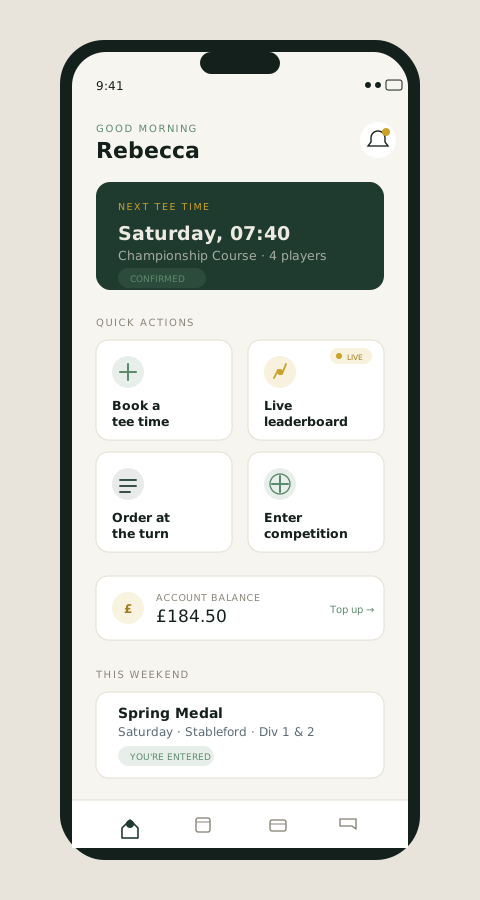
The Open works because everything is in one place under one account. Members do not juggle a booking system, a separate competition entry form, an email list, and a different app for the bar. When you force members to context-switch between systems, you introduce friction. Friction reduces engagement. It is that simple. See how Verro connects every part of your club into one platform.
Live data changes the on-course experience
Real-time leaderboards at The Open keep fans engaged with the competition in ways that a static results page cannot. The same principle applies at club level. A member watching the Spring Medal leaderboard update on their phone while waiting on the 16th tee is more engaged with the competition, with the result, and with the club than one who drives home and checks a PDF of results pinned to the noticeboard. Verro's live scoring and competitions module works the same way: scores post hole by hole from the course, the leaderboard updates instantly, and a display screen in the clubhouse shows the standings without anyone touching it.
Your club app is now a brand touch point
TheOpen.com is not just a utility. It represents the championship. Members judge the quality of an event partly by the quality of its digital presence. The same is true for clubs. A poorly designed booking interface or a clunky competition entry process communicates something about the club, whether you intend it to or not. Your app should work like a front desk in a member's pocket: fast, reliable, and representing the club well.
Year-round engagement requires year-round infrastructure
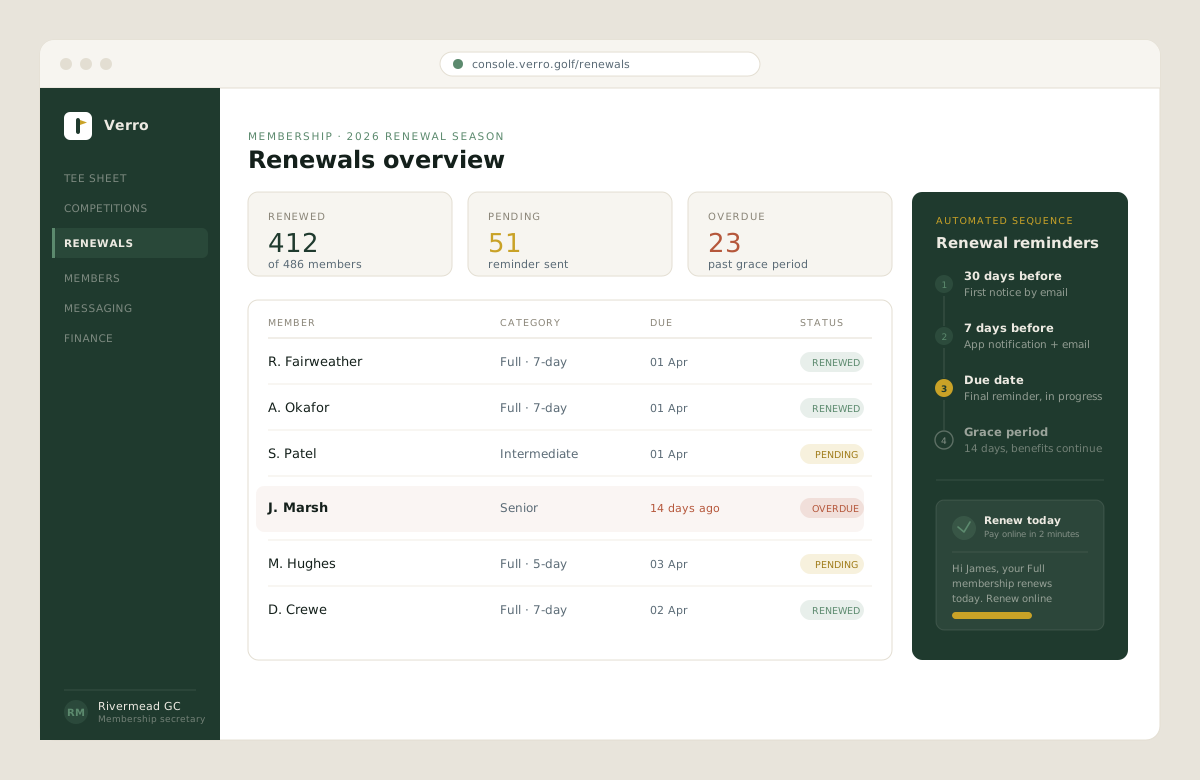
The R&A built a platform to maintain a relationship with fans all year, not just during championship week. For clubs, the equivalent is the period between rounds: renewal communications, competition announcements, news, social events. Most clubs handle this with a patchwork of email lists, WhatsApp groups, and noticeboards. That patchwork creates inconsistency. Members experience different things depending on which channel they happen to be paying attention to. A single communications platform, tied to the same member record as bookings and competitions, fixes that.
The yellow scoreboard
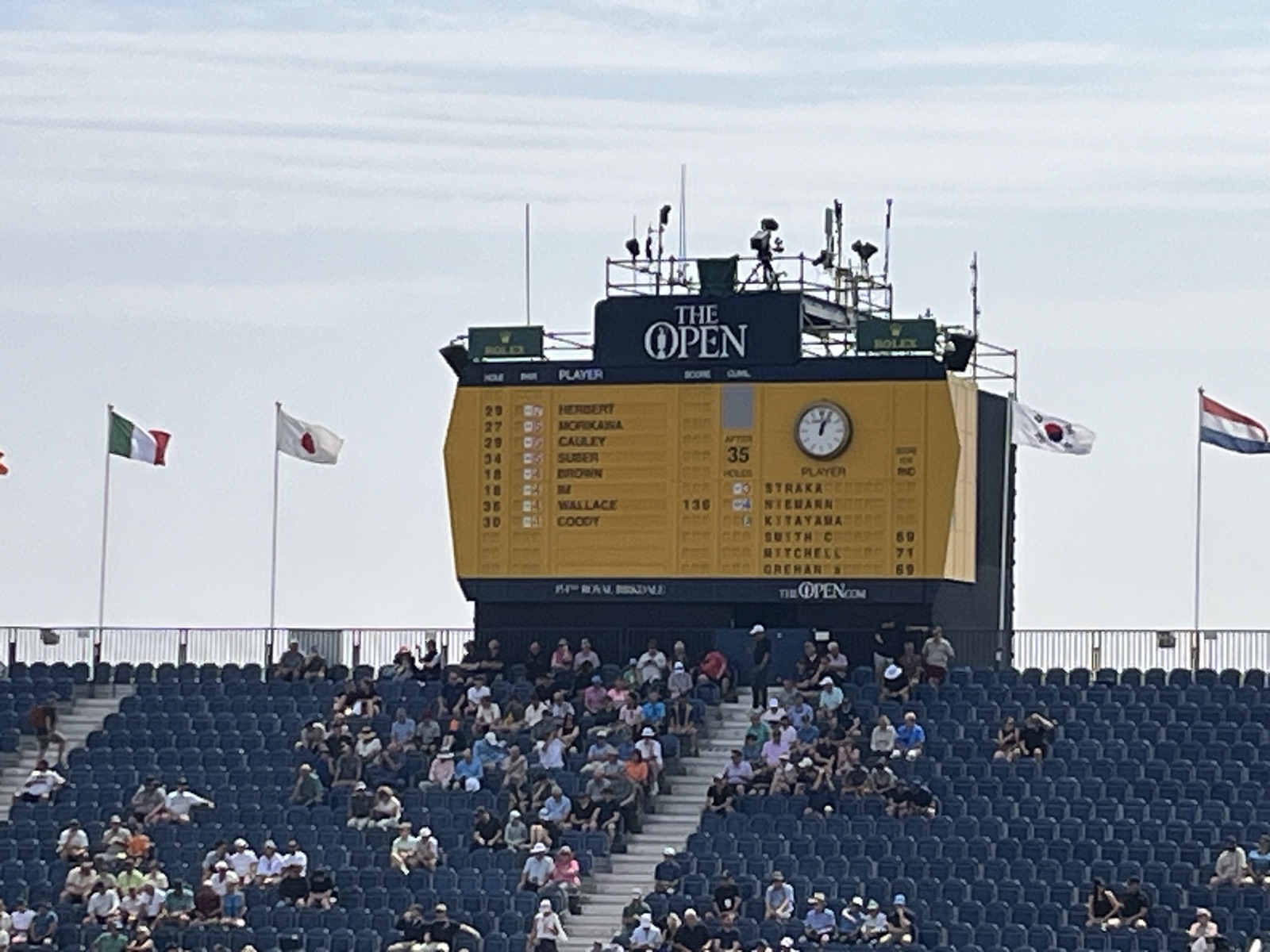
The manual scoreboard on the 18th at The Open is still there because it means something. It is a deliberate piece of continuity in an event that has changed almost everything else about how it presents itself to the world.
That instinct is right. Technology in golf should enhance what makes the sport valuable. The competition, the community, the ritual of playing together. Not replace it.
The clubs that get this balance right are not the ones that deploy the most technology. They are the ones that use technology to remove the friction that gets in the way of what members actually want: to book easily, compete properly, and feel connected to the club they joined.
The administrative burden on club staff, the Monday morning reconciliation, the competition results that take three days to publish. None of that is tradition worth preserving. It is just friction that better technology removes.
What to do with this
If you are a club manager thinking about the digital experience your members have, start with this question: could a member book a tee time, enter a competition, check the live leaderboard during a round, and order something at the halfway house without leaving one app?
If the answer is no, they are experiencing exactly the fragmentation that The R&A spent years and considerable resource fixing for a global audience of millions.
The good news is that the technology to solve it is available, and it does not require a major championship budget. If you are comparing the main options, read our comparison of IG Golf, ClubV1, and Verro. That is what Verro is built for. Book a demo and we will set it up using your club's own name, course, and membership structure.
Adam Lynch is the founder of Verro. He previously served as Assistant Director of Digital Media at The R&A, where he was responsible for the commercial digital presence of The Open Championship, including TheOpen.com.