This is one Tuesday, a medal day, at a members' club that will feel familiar to most general managers reading it. The times are specific because the day was tracked, honestly, as it happened. It is not a claim about every club or every day. It is what one busy competition day actually looks like when you write down where the hours go.
The general manager is the club's chief executive
It helps to say plainly what the role actually is, because committees do not always see it. A golf club general manager is the chief executive of the facility. Strategic direction, financial management and budgeting, compliance, and HR all sit with them, alongside staff management across golf operations, greenkeeping, food and beverage, and retail.
Job postings for the role commonly describe up to 40 percent hands-on operational presence in golf operations and daily golf services. That figure sits alongside the strategic and commercial side of the job, not instead of it. Both halves are real, and both have to happen on the same day, often the same morning. Weekend work and rota-based scheduling are standard at most clubs. Competition days do not move to suit anyone's diary.
Before eight o'clock
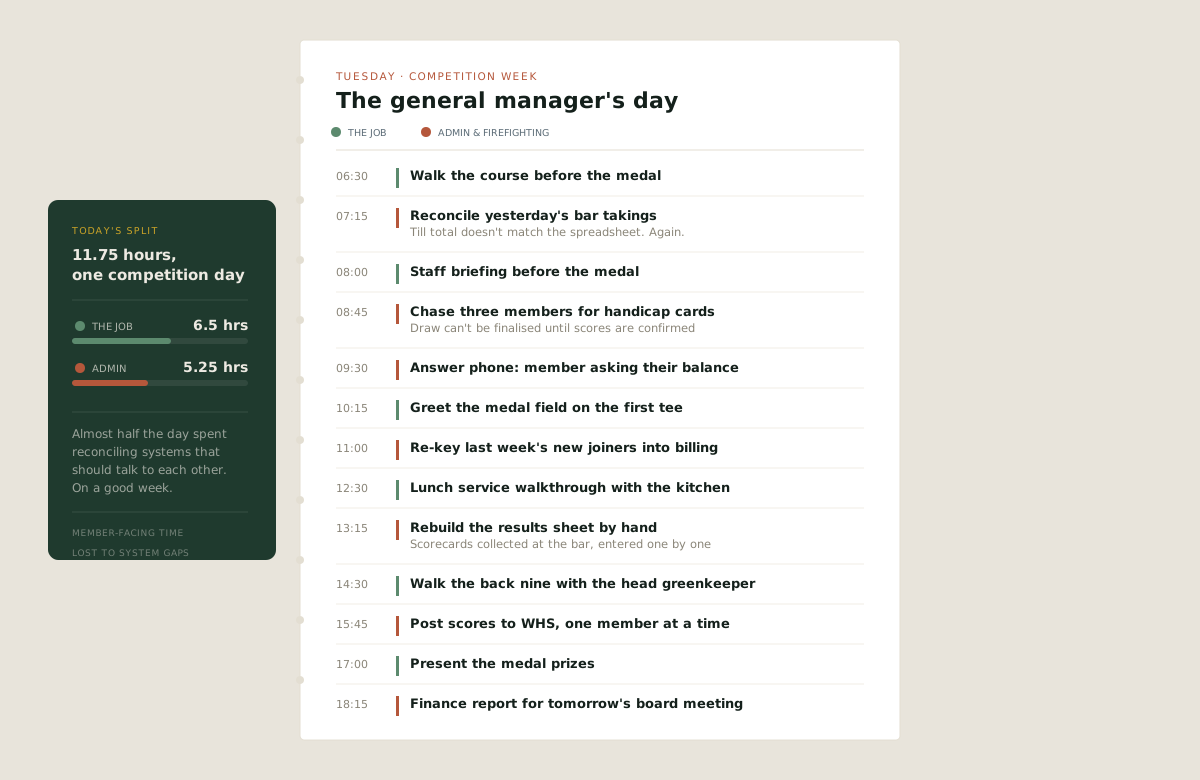
06:30. The course walk comes first, ahead of the field. Pin positions, bunker rakes, a soft patch on the ninth fairway worth flagging to the greenkeeper before sixty players find it themselves. This is the part of the job that needed no explanation when they took it.
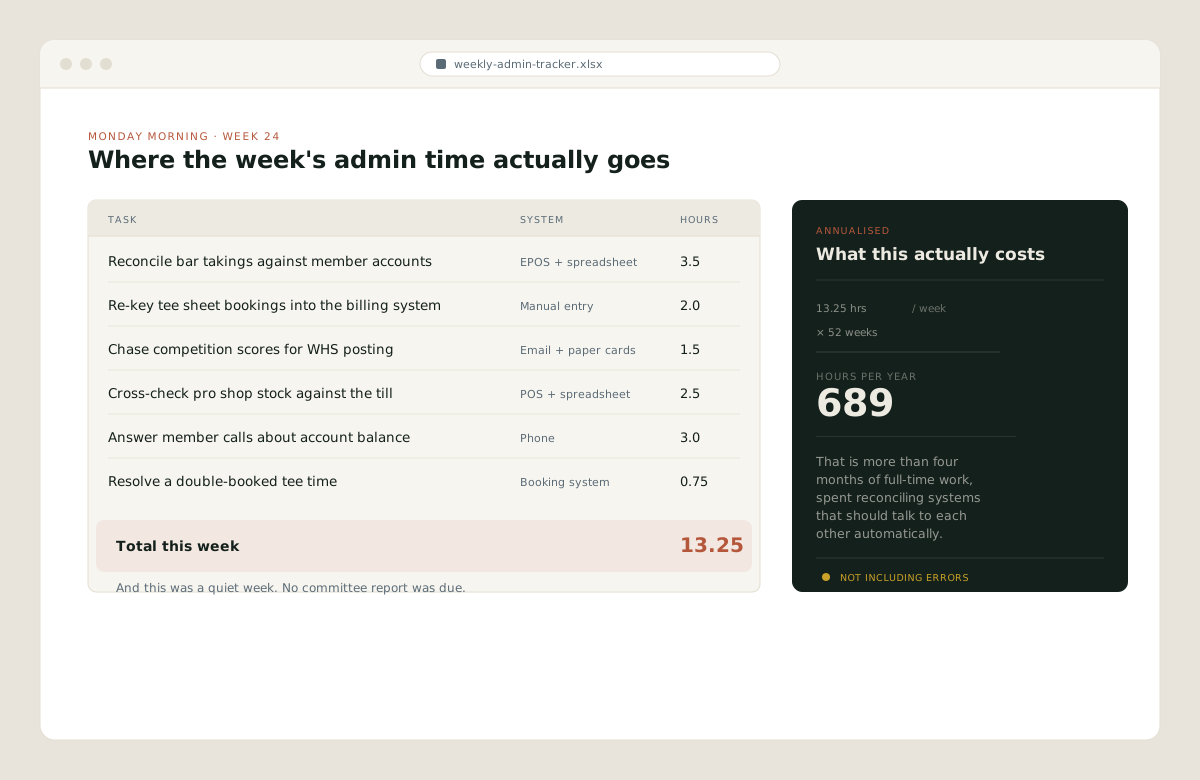
07:15. Back inside, and the morning turns. Yesterday's bar takings need reconciling against the membership records before the office opens, because the till total does not match the spreadsheet. It rarely does. The epos system and the membership system were never built to agree with each other, so somebody has to make them agree by hand, most weeks, before anything else can happen.
The morning scramble
08:00. Staff briefing before the medal: tee times, marshalling, who is covering the halfway house. Fifteen minutes, and the only part of the morning that runs exactly to schedule.
08:45. Three members still have not returned handicap cards, and the draw cannot be finalised until their scores are confirmed. Two calls and an email later, the draw goes out later than it should, not because anyone was careless, but because the confirmation step depends on paper that has to physically arrive.
09:30. A member rings to ask their account balance. They have no way to check it themselves, so the phone is the way to check it. It is a two-minute call. It is also the fourth one this week asking the same question.
10:15. First tee, medal field. This is the job. Names remembered, nerves settled, a word about the pin on twelve. Nobody on that tee sees a spreadsheet, and that is exactly the point.
The middle of the day
11:00. Last week's new joiners still need re-keying into the billing system from the membership application, because the two do not share a record. Names, addresses, and payment details, typed again into a second place they already existed in a first.
12:30. A walkthrough of lunch service with the kitchen. Covers expected, the halfway house holding up, a supplier delivery running late. Ordinary, necessary, and the kind of thing a general manager should be doing with their own eyes rather than reading about afterwards.
13:15. The scorecards start coming back to the bar on paper, and the results sheet gets rebuilt from scratch, one card at a time. Nothing about a medal score arrives anywhere digitally unless someone puts it there by hand.
The back nine and the leaderboard
14:30. Out again, this time with the head greenkeeper, walking the back nine. Irrigation, a bunker that drains badly after rain, next month's aeration plan. The two people who understand the course best, looking at it together. Also the job.
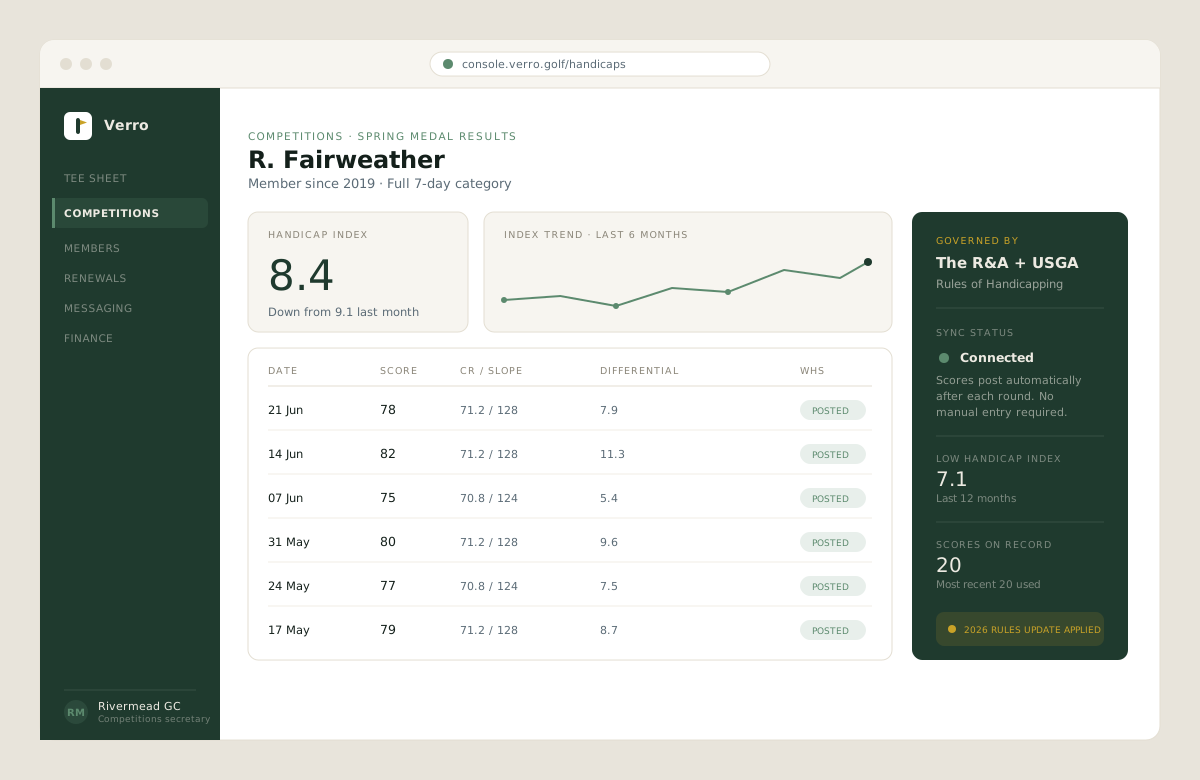
15:45. Scores go up to WHS, one member at a time. Not a batch upload, not an automatic sync from the competition results, an entry screen and a queue of names. A field of sixty takes the better part of an hour to post properly.
17:00. Prize presentation. The nearest-the-pin winner nobody expected, the low gross by a single shot, the room in a good mood because the golf was good and the format worked. This is the reason most of this profession got into it in the first place.
The numbers nobody sees
18:15. Everyone else has gone home, and the finance report for tomorrow's board meeting still needs writing. Bar revenue, green fee income, membership arrears, all pulled from systems that do not export cleanly into each other, checked twice because a wrong number in front of the board is a different kind of problem to a wrong number nobody sees.
Add it up and the day runs to roughly eleven and three quarter hours. Something close to six and a half of them went on the part of the job that brought most general managers into golf: the course, the members, the competition, the team. Something close to five and a quarter went on reconciling systems that hold the same information in different places and refuse to agree on it without a human in between. That split is not a researched industry average. It is what one competition day, tracked honestly, actually looked like. Other days look different. Quieter weeks look better. But most general managers reading this will recognise the shape of it, even if their own numbers land somewhere else.
Not a discipline problem
None of the admin in this day happened because anyone was disorganised. It happened because the tee sheet, the till, the membership record, and the handicap system were built as separate products that were never asked to share a single version of the truth. A general manager's time is the buffer that makes up the difference, every competition day, for as long as that stays true.
Verro exists because that gap is a software problem, not a people problem. We hold membership, the tee sheet, competitions, billing, and the till against one member record, so scores, balances, and results do not need reconciling by hand. If you want to see what a competition day looks like when the systems already agree with each other, book a demo.
Adam Lynch is the founder of Verro. He previously served as Assistant Director of Digital Media at The R&A and as CEO of WooRank, a SaaS platform acquired in 2023.