Off-course golf is not a side show any more. Topgolf's fourth UK venue, at Watford, joins sites at Chigwell, Addlestone, and Glasgow. BigShots Golf, which Topgolf acquired for close to £24 million, already runs venues at Northwick Park and Stockley Park, with a third and fourth UK site announced for Essex. The Club Company has converted driving ranges at eight of its golf clubs into Strike Shack, a format combining Toptracer ball-tracking technology with food and drink service, heated bays, and a social setting closer to a bar than a bunker.
That is real money, moving fast, into a format that looks nothing like a traditional round. The instinct to treat it as a threat is understandable. I think it is also the wrong instinct, or at least an incomplete one.
Why off-course golf lowers the barrier to entry
A full round at a traditional club asks a lot of someone who has never swung a club. It asks for four hours, a dress code they may not know about, a green fee or a guest invitation, and a willingness to be visibly bad at something in front of strangers on an open course. Each of those is a small barrier. Together, they are enough to stop most curious people from ever trying.
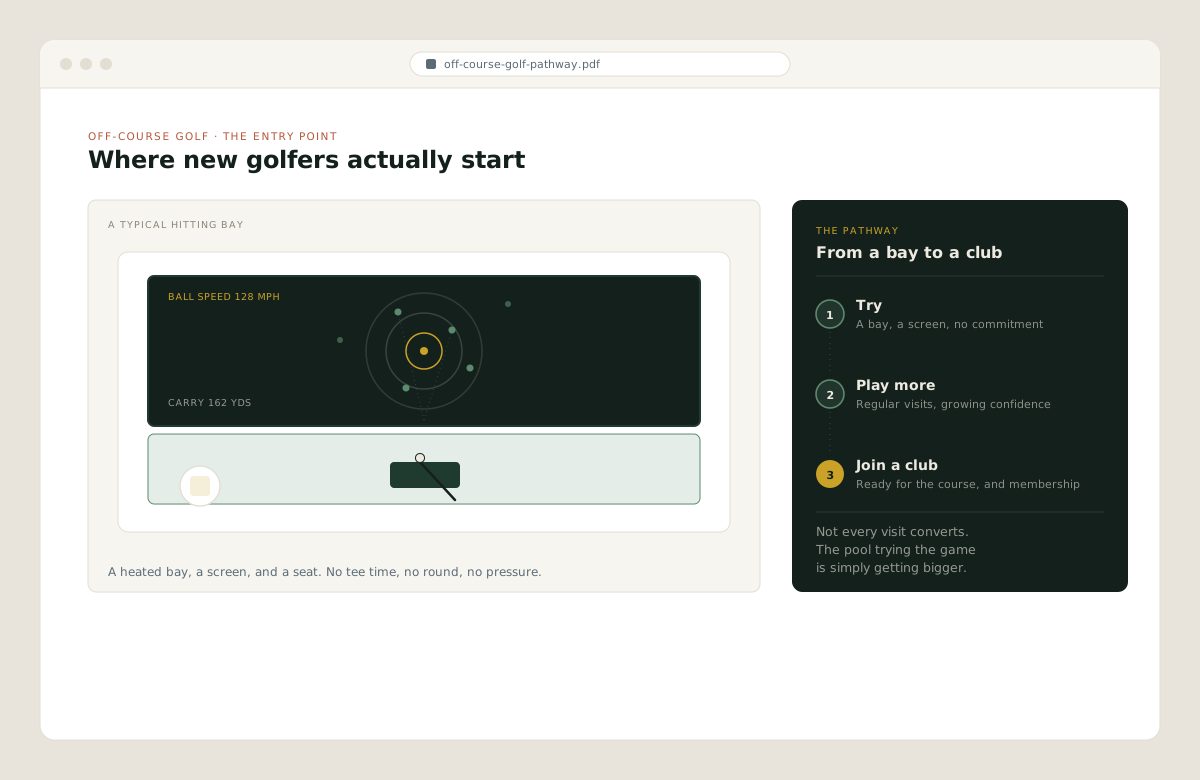
A hitting bay removes nearly all of it. An hour, not four. A screen that tells you how far the ball went, rather than a scorecard that tells you how badly you did relative to par. A table, food, and a drink, so a bad shot is a joke shared with friends rather than a hold-up on the course behind you. Nobody is intimidated by a driving range bay the way they can be intimidated by a first tee.
Evidence this grows the pipeline rather than shrinking it
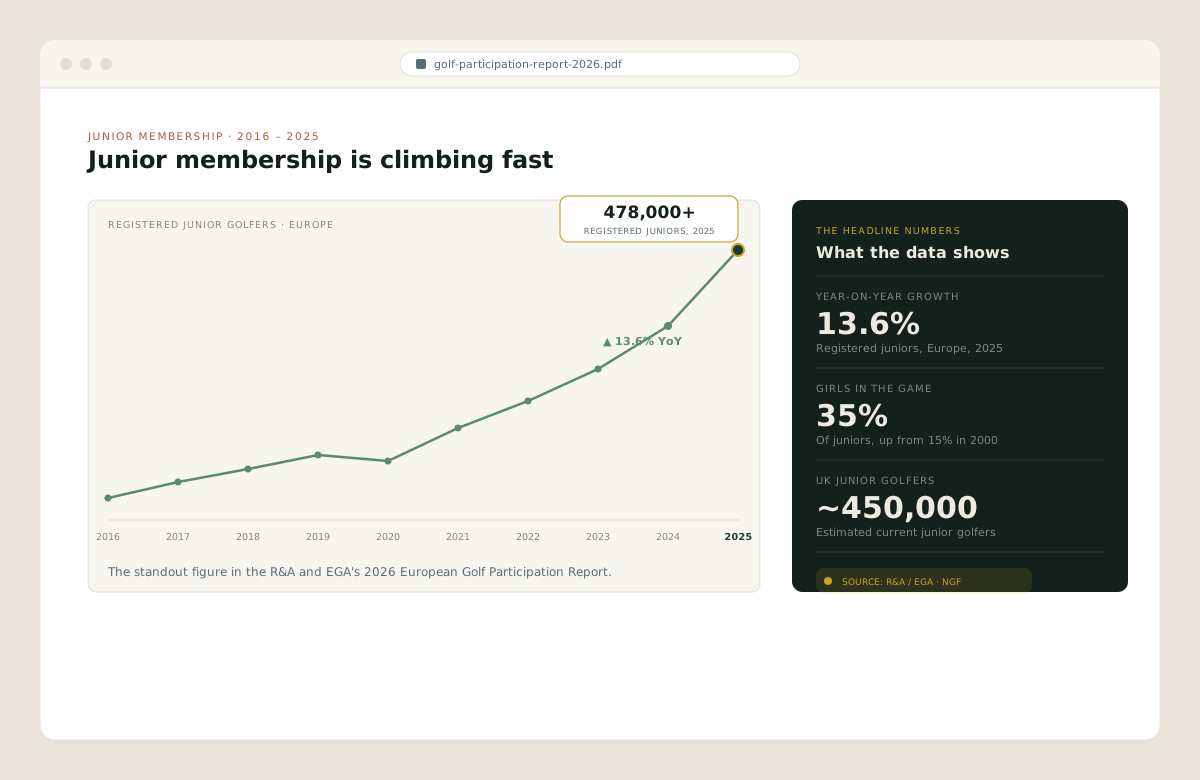
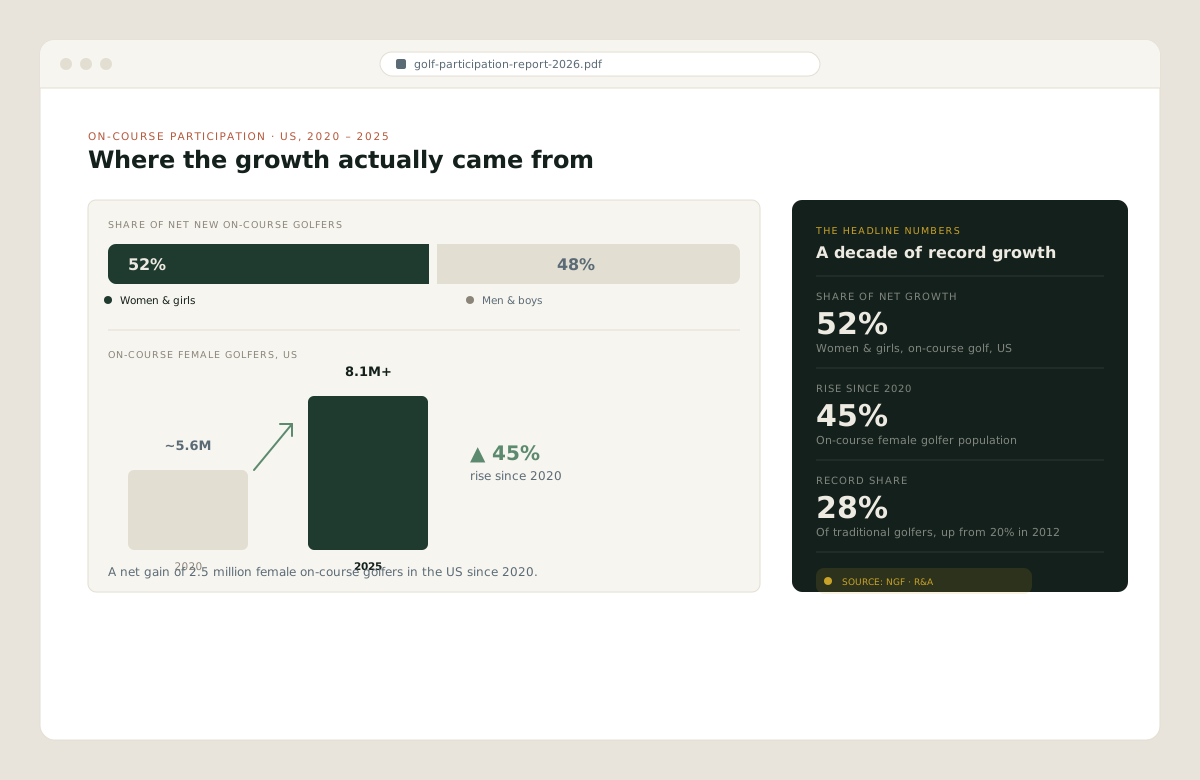
This connects directly to the participation growth already showing up in the data. The junior growth figures and the women's participation growth figures both point to the same mechanism: off-course formats are a lower-barrier entry point that gets new players into the game before they ever consider club membership.
The Club Company's own move is the clearest evidence available. It did not build Strike Shack as a stand-alone business competing with its own golf clubs. It built it as a feeder, explicitly hybrid with its existing club infrastructure, and followed it with Strike Nine, a membership that combines Strike Shack access with nine-hole course play at the same sites. That is a traditional club operator using the off-course format as a deliberate pathway into membership, not treating it as an enemy at the gate.
None of this proves every Topgolf visitor eventually joins a club. Most will not. But a larger pool of people trying the game, at lower cost and lower intimidation, produces more people further along the pathway than a smaller pool ever could, even at a lower conversion rate. A bigger top of the funnel beats a narrower one, almost regardless of what the conversion rate turns out to be.
What traditional clubs can actually learn from the format
Three things are worth taking seriously, not as gimmicks, but as genuine lessons in what a beginner actually wants.
- Shorter formats work. An hour in a bay, or a nine-hole round, asks far less of someone's day than an 18-hole round does. A club that only offers the full round, with no shorter or more social alternative, is asking a beginner to commit to the hardest version of the game before they have decided they like it.
- Social framing matters as much as the golf. Food, drink, and a group of friends around a shared screen is a night out that happens to involve golf. A club that frames its own beginner offer around technical instruction first, rather than a good time first, is solving for the wrong priority.
- Technology-assisted feedback removes intimidation. A screen that shows ball speed and carry distance gives a beginner something concrete and slightly gamified to improve, instead of a scorecard that only tells them how far behind everyone else they are. Clubs with their own simulator or range technology can offer the same thing, inside the club rather than instead of it.
Where off-course venues genuinely do compete with clubs
Being fair to the other side of the argument matters here. There is a specific, limited place where entertainment golf venues are not expanding the pipeline. They are taking a slice of existing golfers' time and spend, directly.
A member who could have come to the club for a casual nine holes and a pint after work, and instead goes to a bay with colleagues, has not been converted into a future member. They were already one, and the club lost an evening of their spend to a competitor with better food, a more comfortable room, and no need to find a playing partner. That competition is real, and it is worth a club's attention, particularly for casual, social use of the facility rather than for competitive or membership-driven play.
Converting the interest is a membership and communications problem
Assuming the pipeline argument holds, the practical question becomes how a club actually captures someone who has started at a bay and is ready for more. That is not a marketing campaign. It is a membership and communications design problem.
A public or pay-and-play course is often the natural next step after a bay, since it asks for less commitment than full membership. A private members' club needs a genuine beginner pathway, a taster offer, short-format play, and a membership category priced for someone who is not yet sure, rather than a single full-category application form that assumes commitment before interest has been earned.
The clubs that will capture this pipeline well are the ones that make the step from bay to course feel like a natural continuation rather than a jump. That includes the club's own technology. A beginner who has just used a polished screen and an easy booking app at an entertainment venue will measure a club's own booking experience against it, whether that comparison is fair or not. A clunky phone call to book a trial round, against a slick app they just used somewhere else, is exactly the kind of small friction that loses someone a club never knew it had a chance with.
Adam Lynch is the founder of Verro. He previously served as Assistant Director of Digital Media at The R&A and as CEO of WooRank, a SaaS platform acquired in 2023.