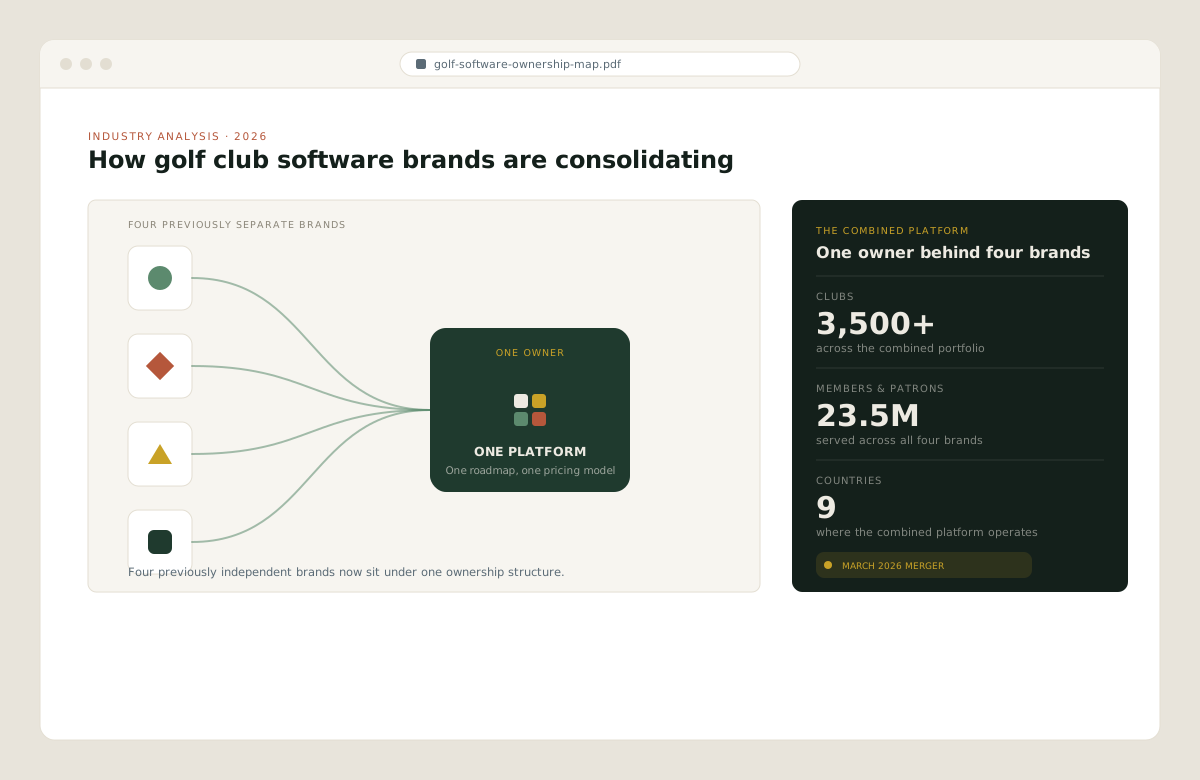
I wrote about the Xplor-Clubessential merger the week it happened, because a club evaluating software right then needed to understand what it meant for that one deal. This piece sits above that one. It is about why deals like it keep happening, what a club actually gains from a portfolio-owned vendor, what it gives up, and how to weigh that trade-off honestly rather than assume one side of it is always right.
I should say plainly where I sit. Verro is independently owned, and I have an obvious interest in this argument. That is exactly why I have tried to write the case for portfolio ownership as fairly as the case against it, and to let you judge the framework rather than the conclusion.
The economics behind golf technology consolidation
Golf course software is a genuinely growing category. Estimates for its size vary by research firm and by how broadly "golf course software" is defined, which is worth knowing before you treat any single figure as precise. One widely cited estimate puts the market at around $168 million in 2025, growing at roughly 12% a year to reach approximately $522 million by 2035. Whatever the exact number, the direction is not in dispute. A market growing at that pace, in a sector as fragmented as golf technology has historically been, is exactly the kind of market private equity and portfolio owners look to consolidate.
It is also already a concentrated market. The top three companies in golf course software held over 42% of it between them in 2025. That level of concentration is a sign consolidation has already done real work, not a sign it is about to start.
The capital is following the growth. Golf drew fresh private equity attention after the Topgolf transaction, and a Goldman Sachs commentator has publicly predicted that very large software assets will come to market in golf during 2026. In the UK specifically, this is not a forecast. ClearCourse already owns Club Systems International, the company behind ClubV1, HowDidiDo, and intelligentgolf, bringing several of the most recognised British club brands under one group. I covered the most recent example of this pattern in detail in what the Xplor-Clubessential merger means for clubs choosing software, and the mechanics there apply to any future deal, not just that one.
What portfolio ownership genuinely offers a club
It is easy, from where I sit, to only tell the story of what a club loses when its vendor gets acquired. That would not be honest. A well-run portfolio owner brings real advantages that a standalone company, mine included, cannot always match.
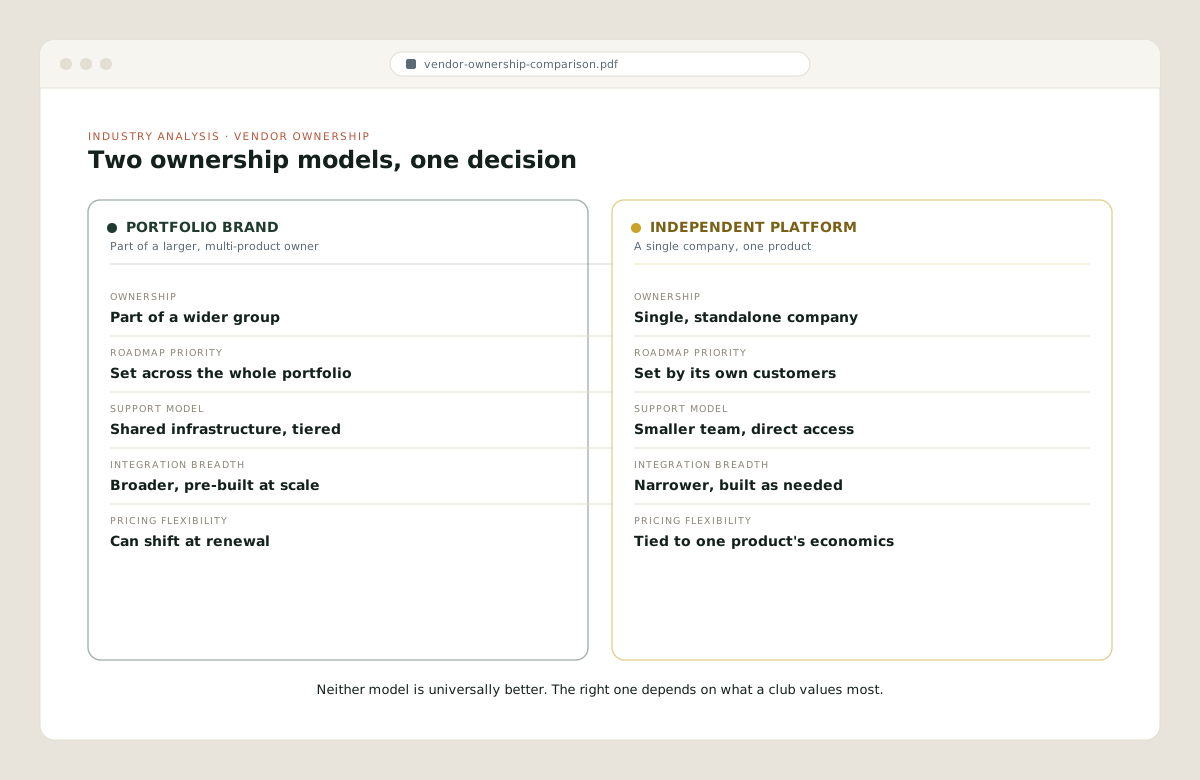
Financial stability. A product backed by a larger group is less likely to disappear because a small company ran out of cash. For a club signing a multi-year contract, that is not a trivial consideration.
Broader integrations, pre-built. A portfolio owner spanning several products can often offer ready-made connections between them, payments, point of sale, handicap systems, that a single-product company would need to build from nothing. Scale buys integration breadth that a smaller vendor has to earn one partnership at a time.
Dedicated support infrastructure. A larger group can staff round-the-clock support, dedicated account management, and escalation paths that a lean, independent team may simply not have the headcount to run. For a large multi-course operation, that infrastructure can matter more than who owns the roadmap.
What portfolio ownership can cost a club
The costs are less visible at the point of sale, which is exactly why they are worth naming clearly rather than discovering later.
A feature that matters to your club but does not scale across the rest of the portfolio is a natural candidate to be quietly deprioritised, not because anyone decided against it, but because nobody with the authority to fund it was accountable to your club specifically. Direct access to the people who actually decide the roadmap tends to get harder as a product grows more layers of group management above it. And product direction increasingly answers to group-level strategy, spanning products your club may not use at all, rather than to any single club's needs. I set out exactly how this plays out after an acquisition, and the specific questions worth asking a vendor about it, in the Xplor-Clubessential piece, so I will not repeat the full list here.
A framework for deciding which trade-off matters to you
Neither model is universally correct, so the more useful exercise is working out which trade-off your own club actually cares about.
- How much do you rely on integrations only scale can buy? A large multi-course group running payments, EPOS, and handicap sync across several sites may need the breadth a portfolio owner can offer more than it needs direct access to a product team.
- How replaceable are you to the vendor? A club that is one of thousands inside a large portfolio has less individual pull over the roadmap than a club that is one of a smaller vendor's few hundred customers. Neither is wrong. Know which one you are.
- What is your appetite for a future migration? Portfolio owners periodically consolidate acquired products onto one underlying platform. If that would be disruptive for your club, ask whether it is planned, not whether it might happen.
- How much do you value speaking to a decision-maker directly? Some committees want an account manager and an escalation ladder. Others want to be able to ask the person who actually sets the roadmap why a feature has not shipped. Both are legitimate preferences.
- What size is your club, relative to the vendor's typical customer? A multi-course group and a single members' club carry very different weight with the same vendor, and that changes which trade-off is actually live for you.
None of these questions has a universally correct answer. They are worth answering honestly before signing a multi-year contract, because the ownership structure you choose today is also a bet on how your influence over that product will look in three years.
Where Verro sits in this, factually
Verro is independently owned. That is a fact about our structure, not an argument that independence makes better software on its own, and I have tried to make the case against my own position as honestly as the case for it throughout this piece. Our pricing is set by what it costs to run and improve one product, not allocated across a wider portfolio, which is simply a different economic starting point to a portfolio brand's, not automatically a better one.
If ownership structure is a genuine factor in how you are evaluating vendors this year, ask any company you are considering, including us, the questions above directly. The answers tell you more than the sales deck will.
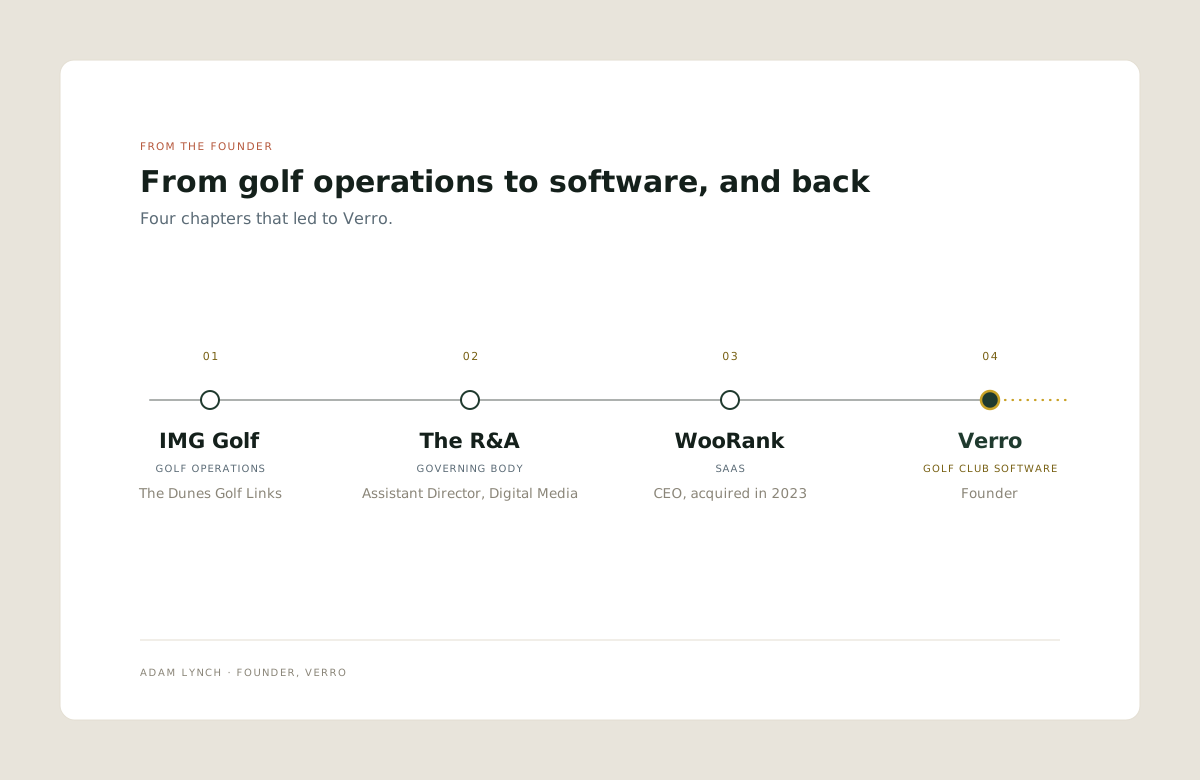
Adam Lynch is the founder of Verro. He previously served as Assistant Director of Digital Media at The R&A and as CEO of WooRank, a SaaS platform acquired in 2023.